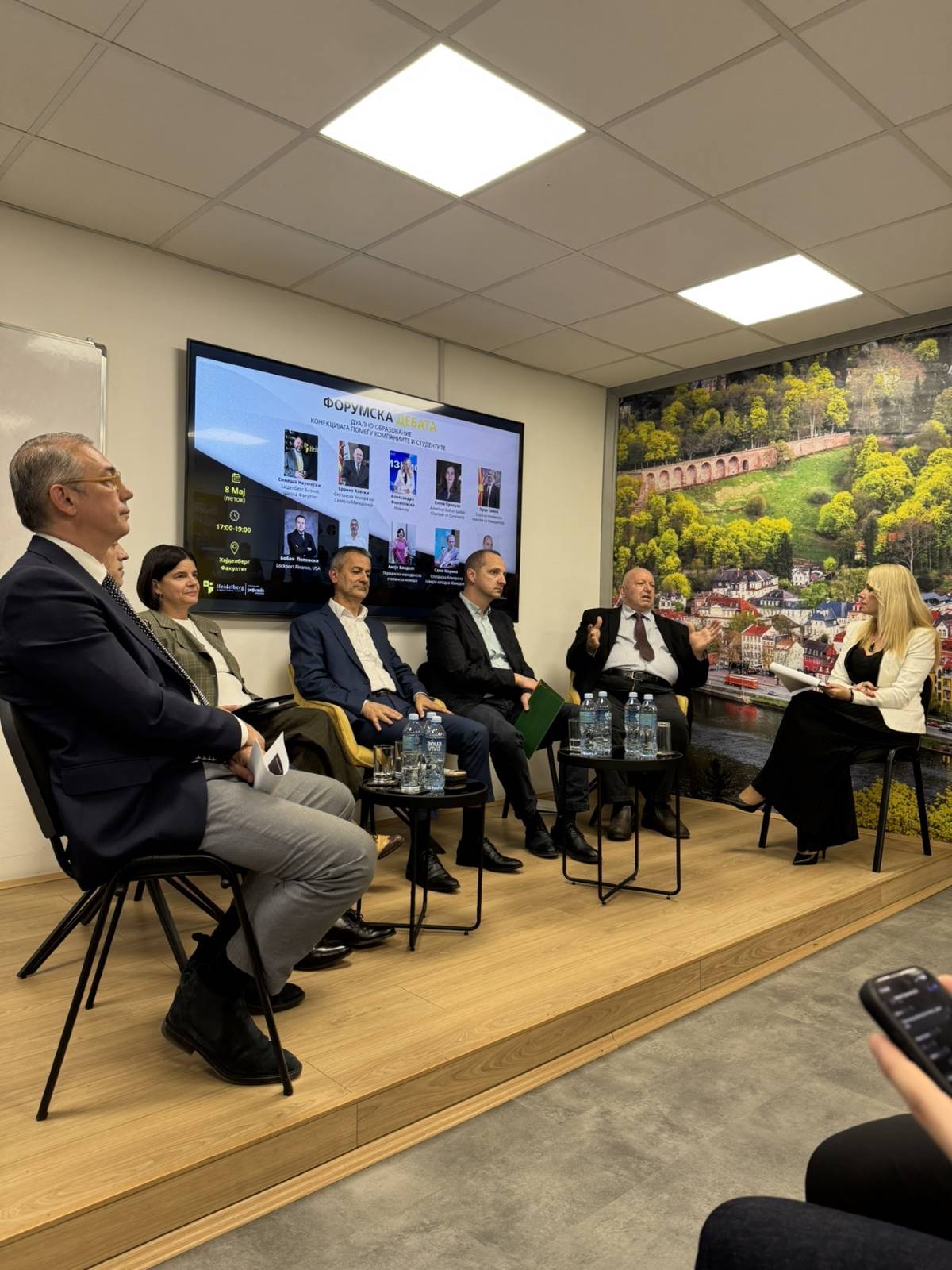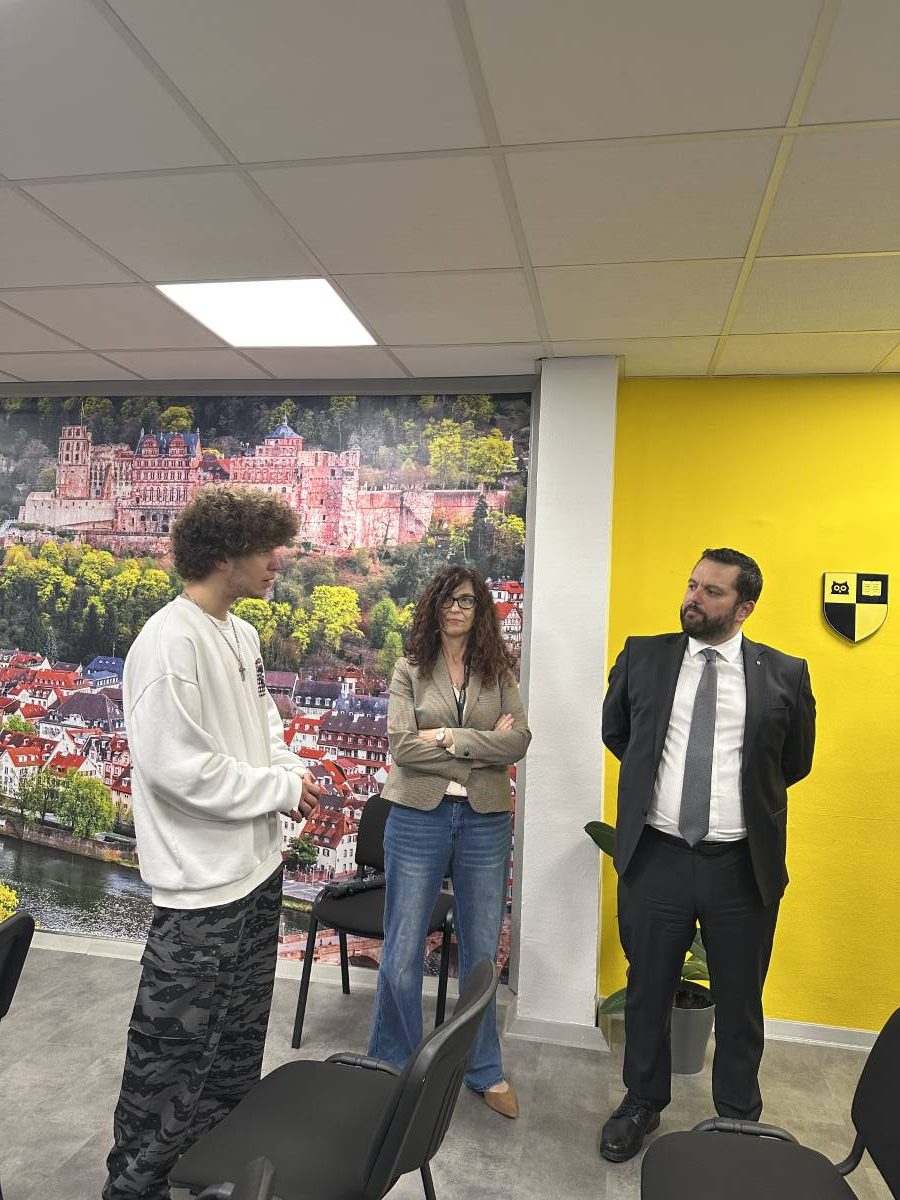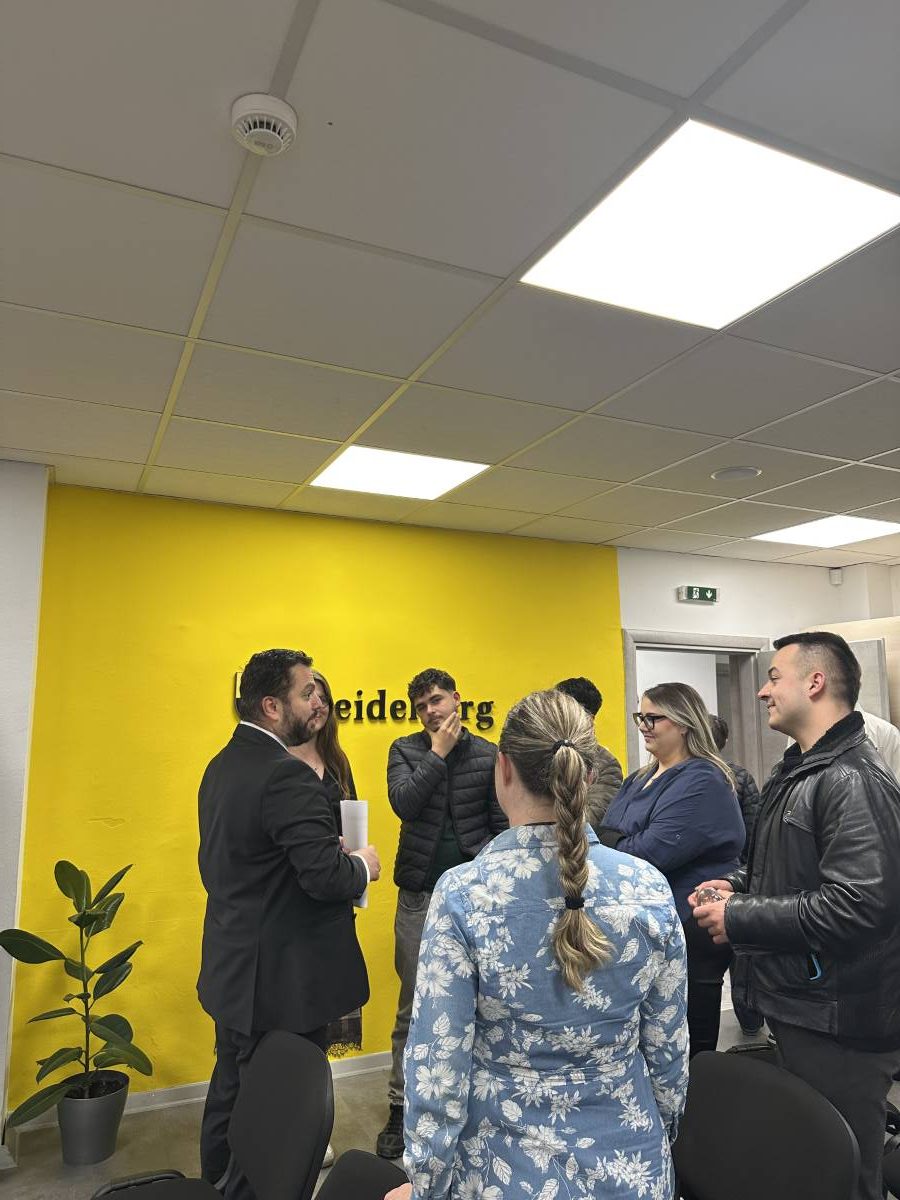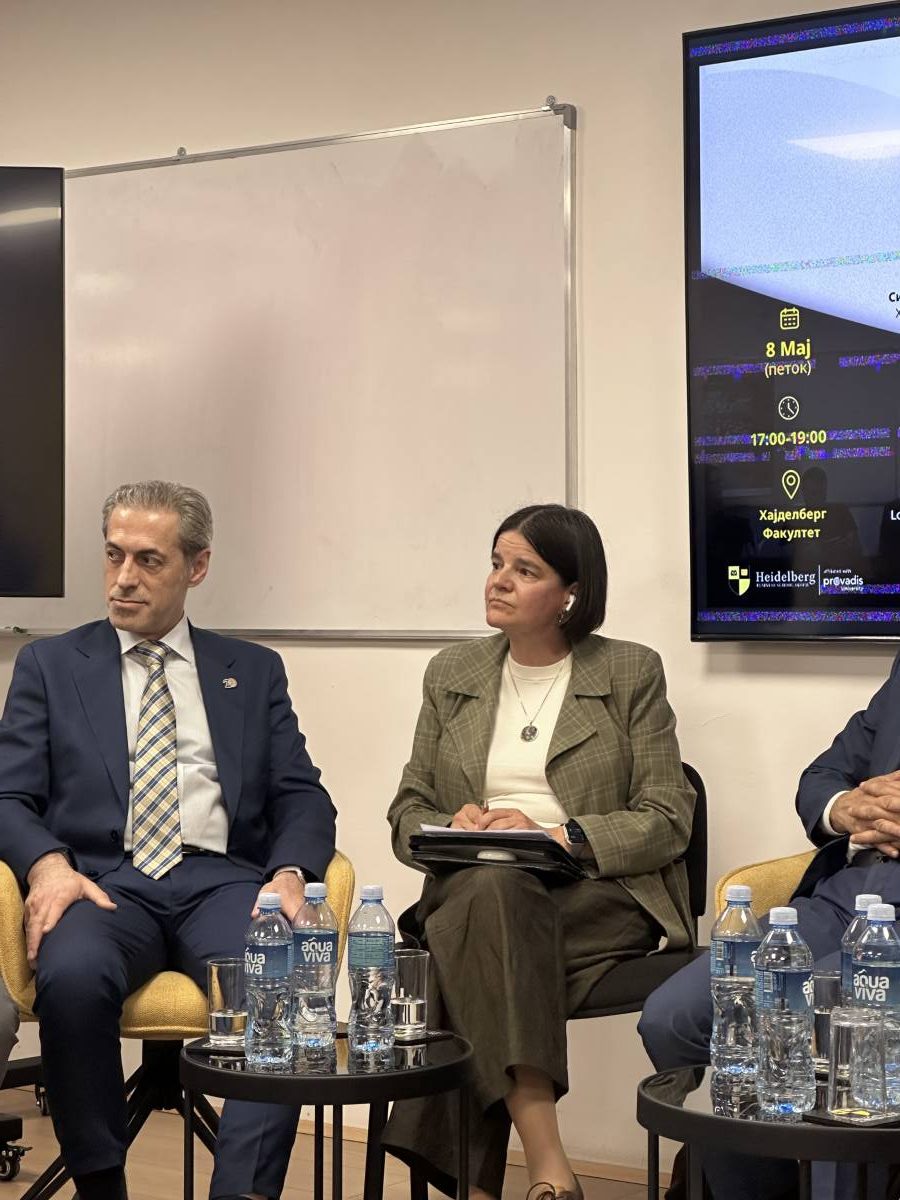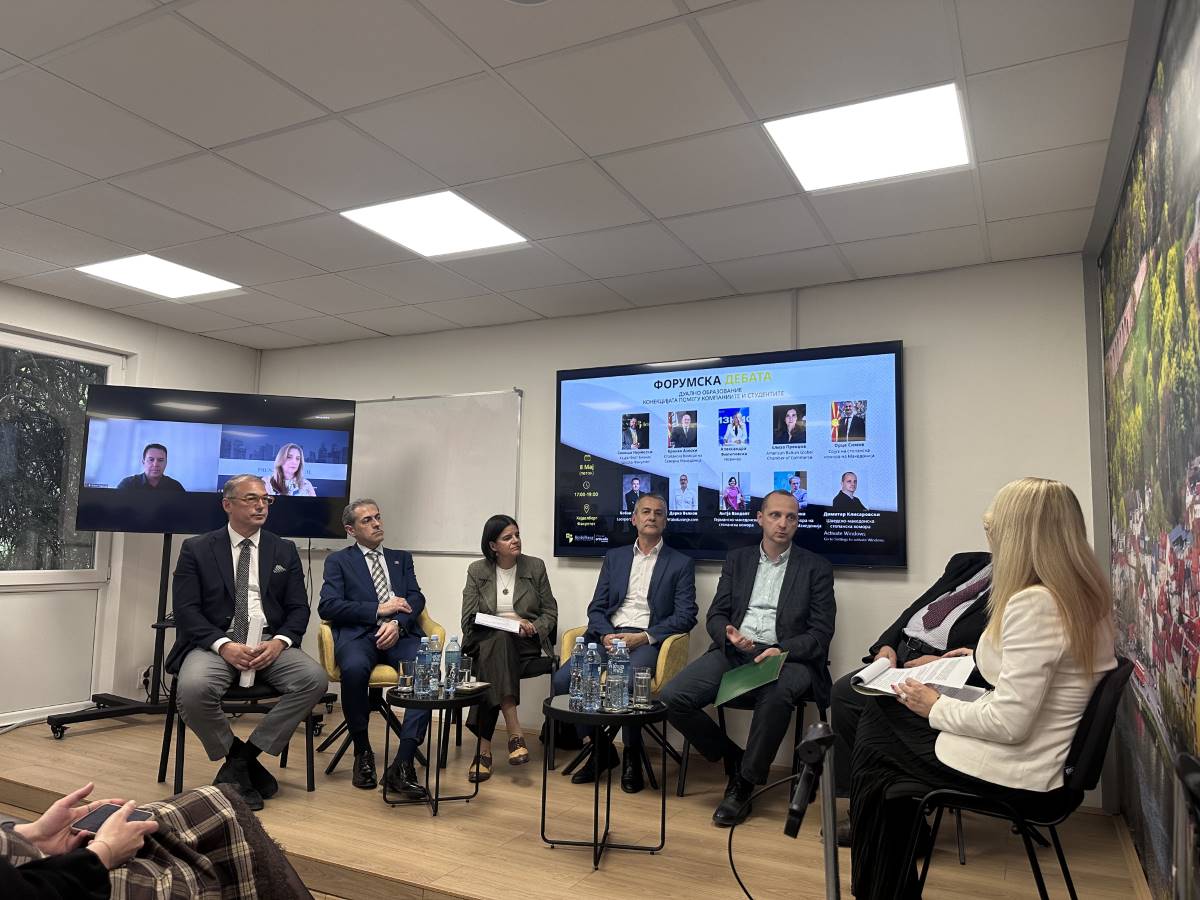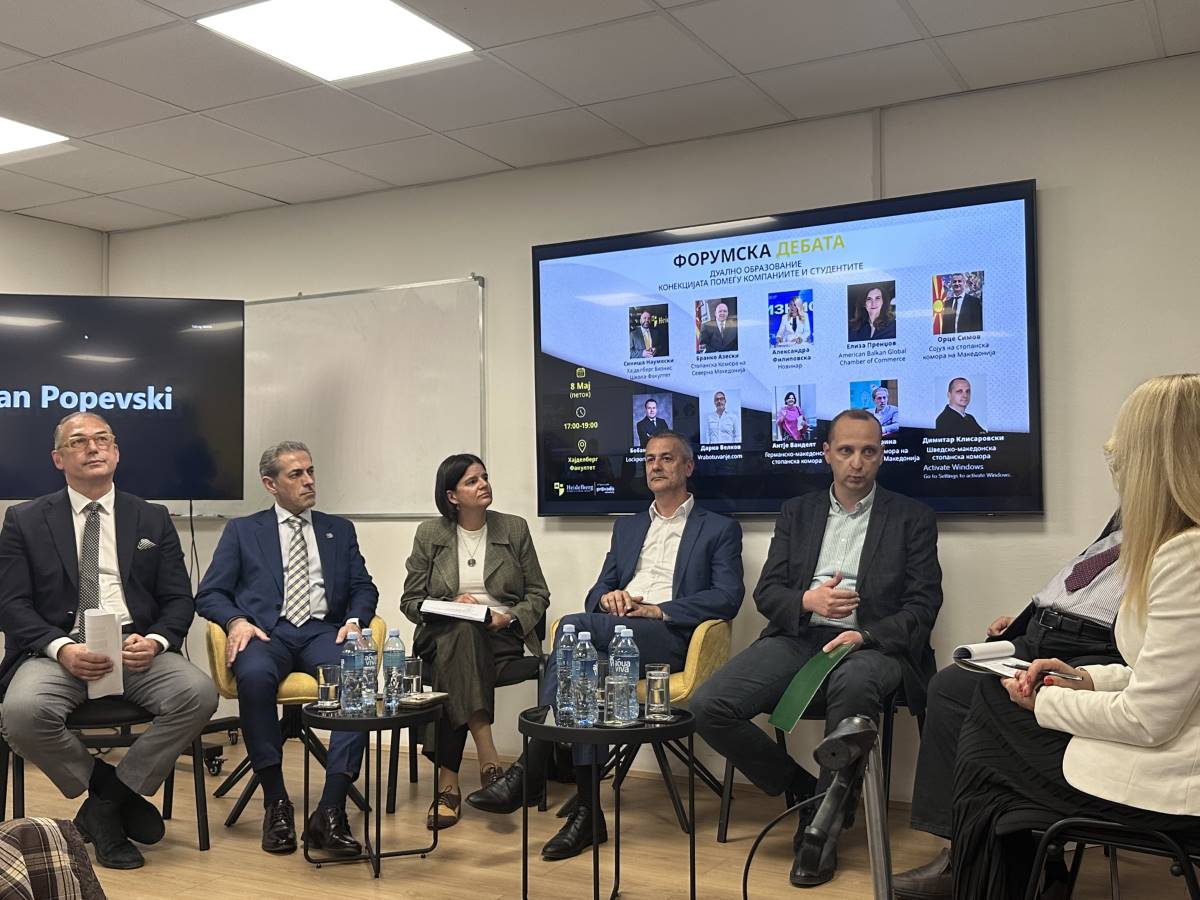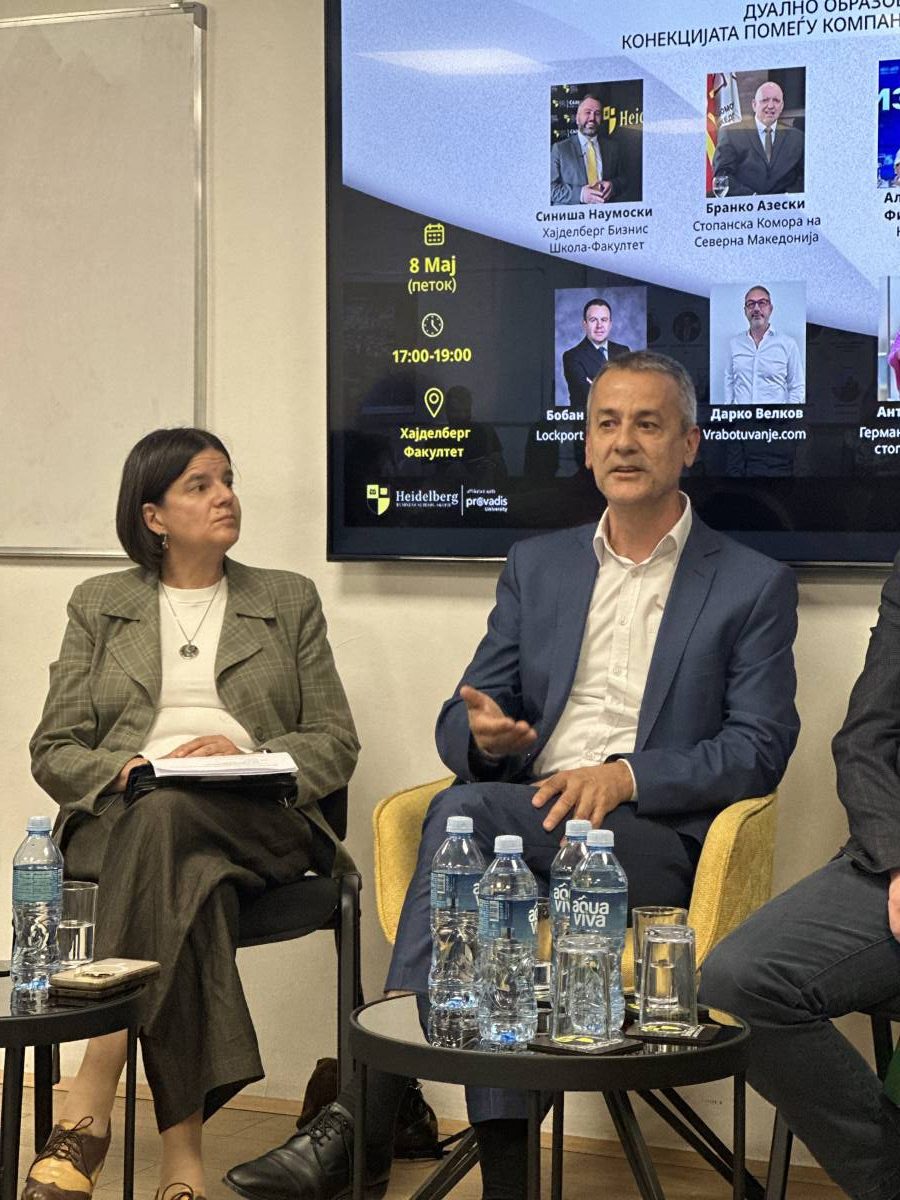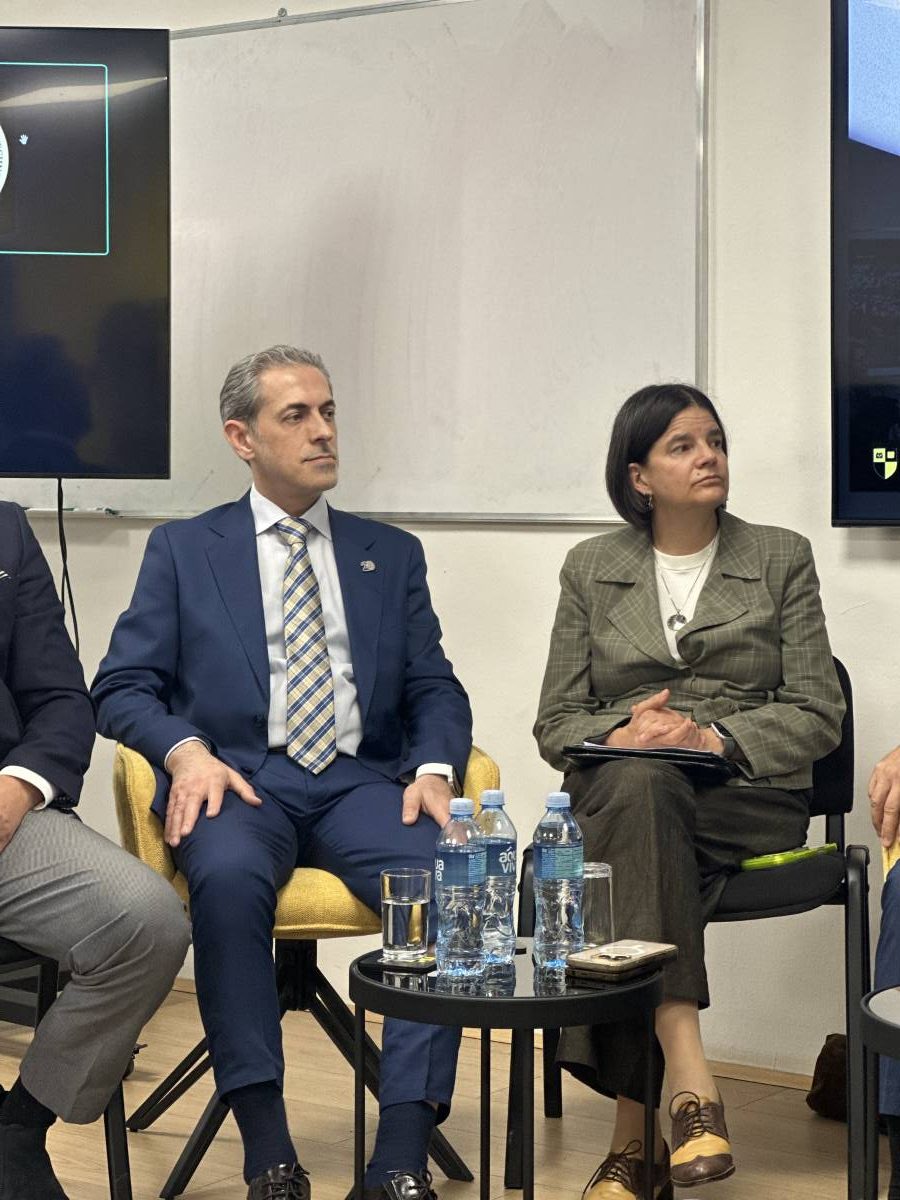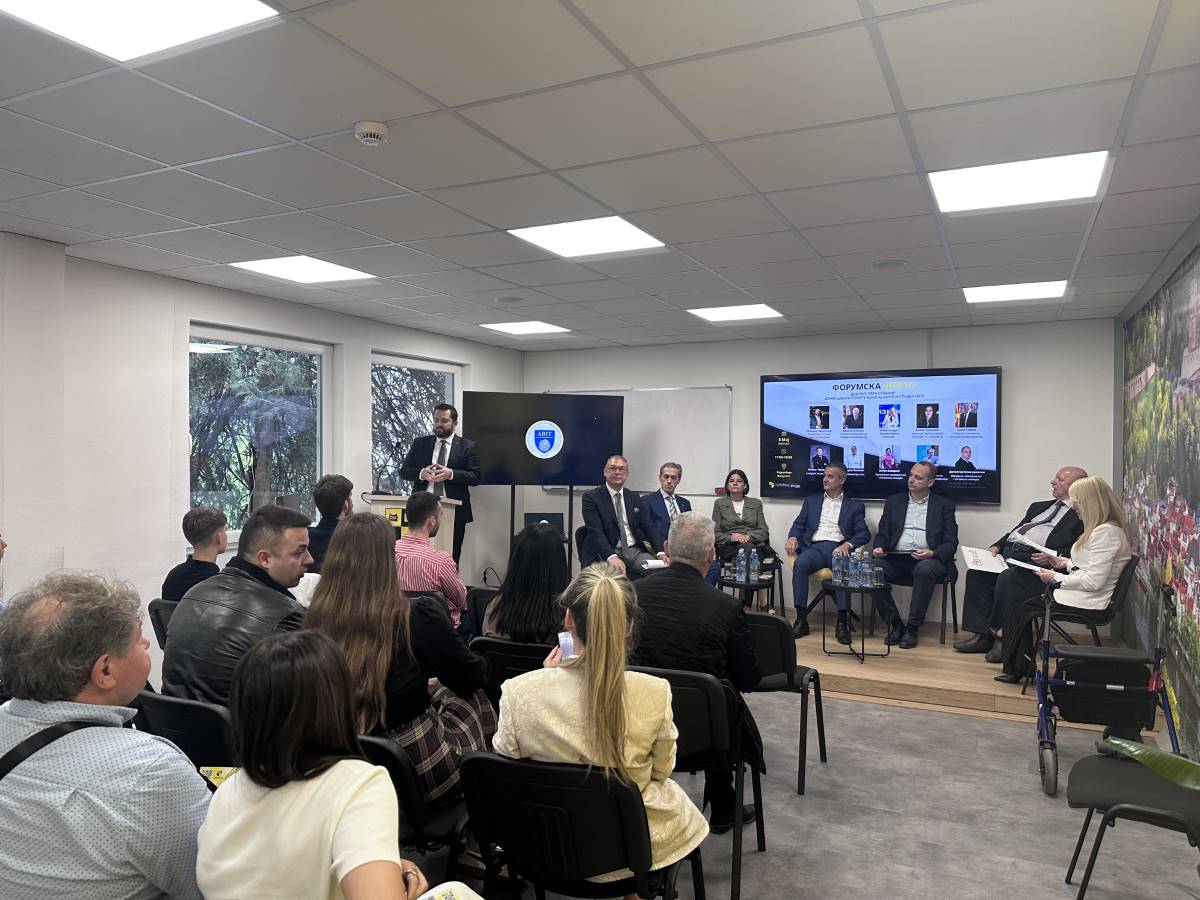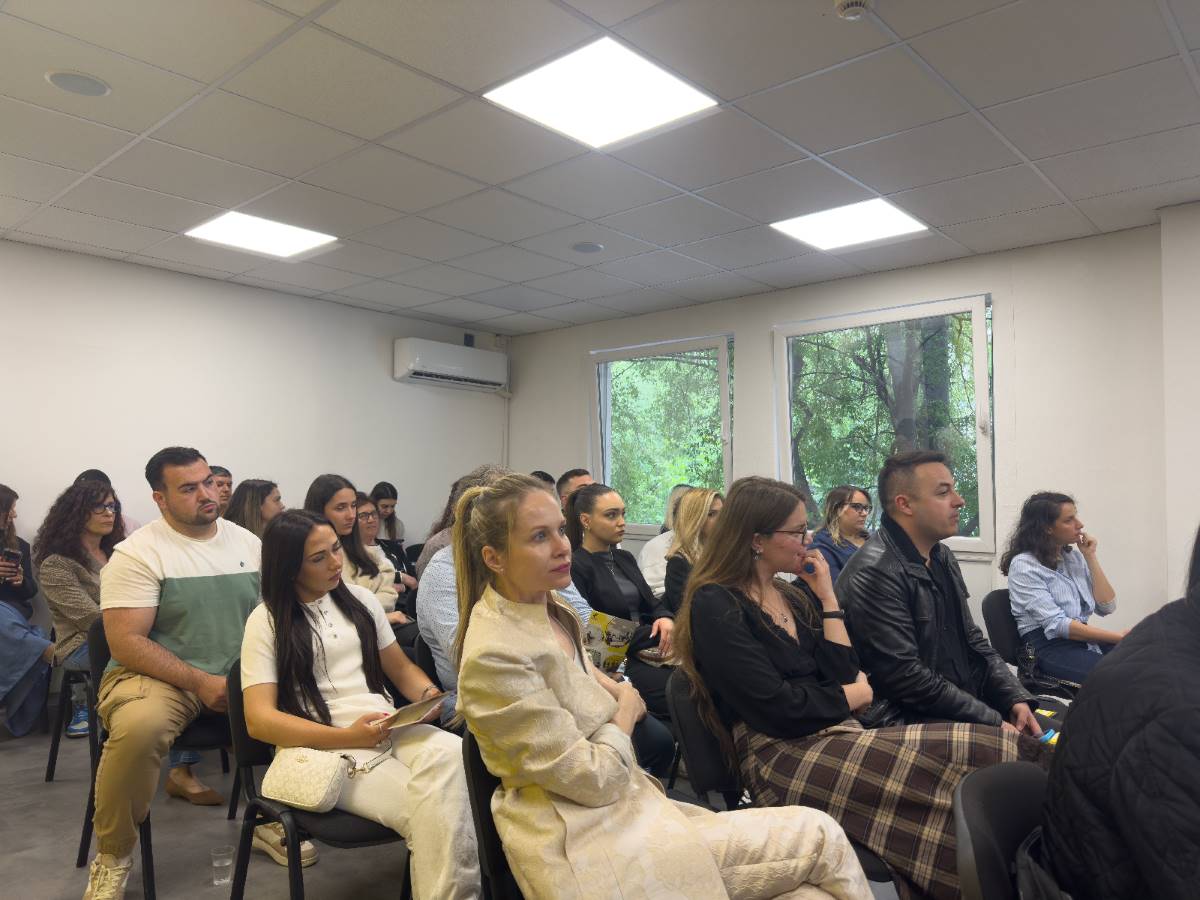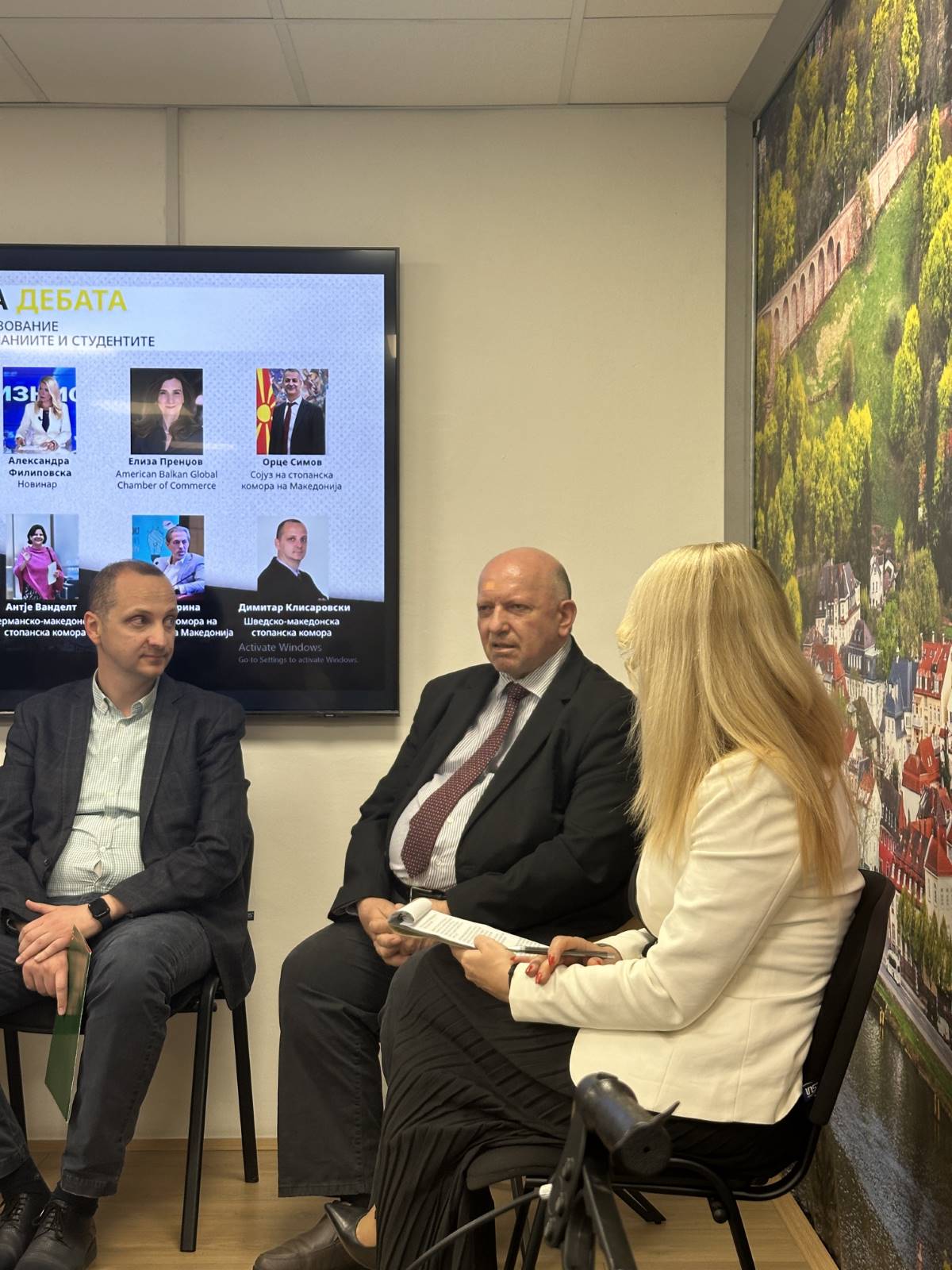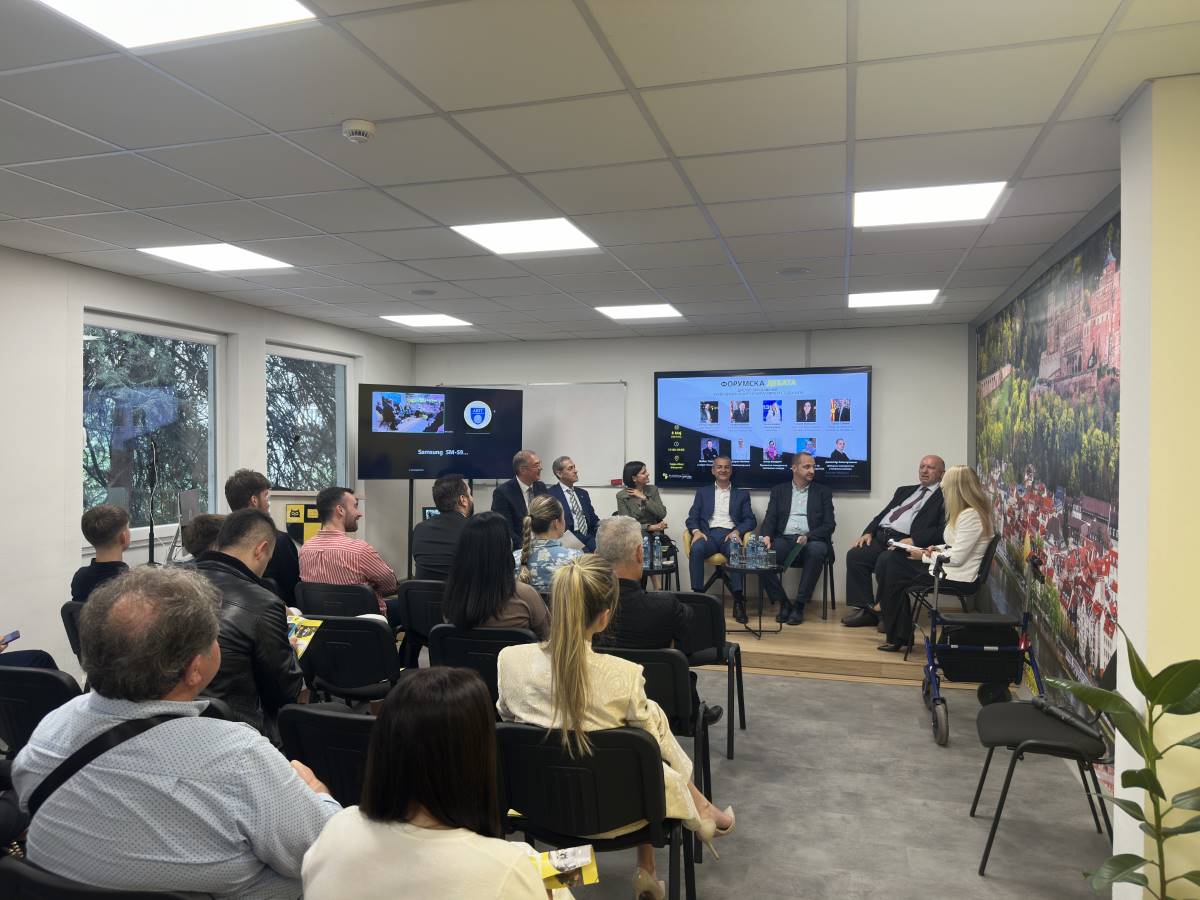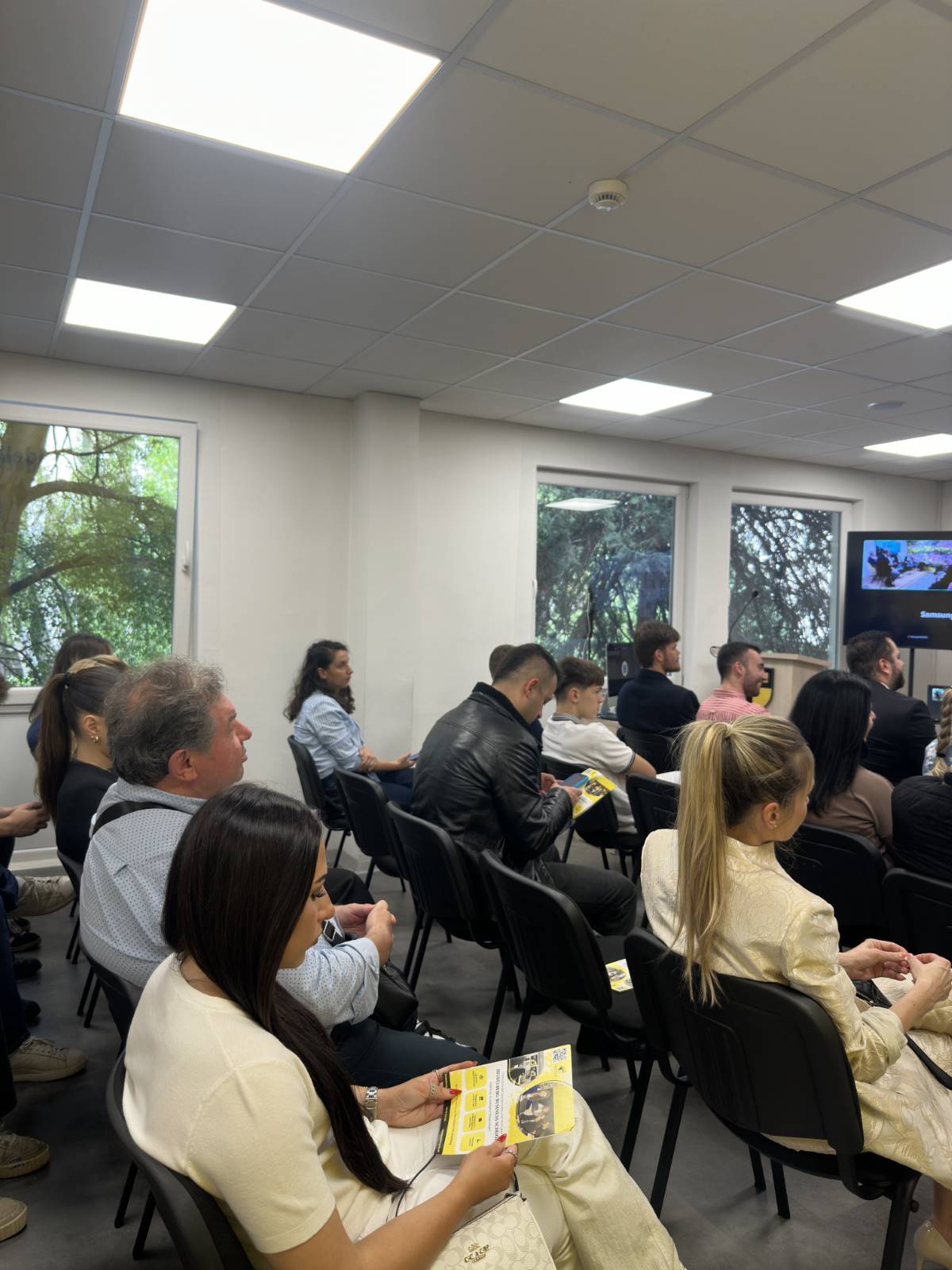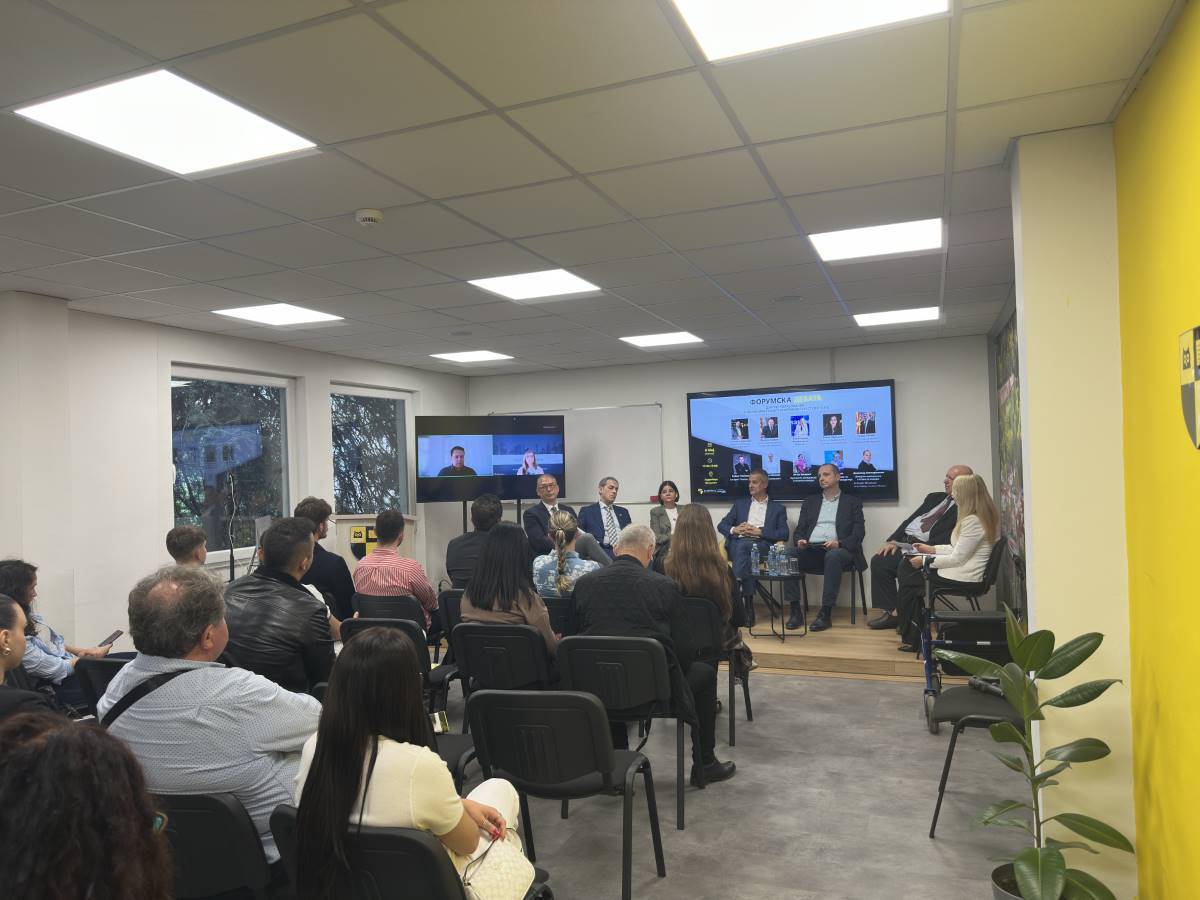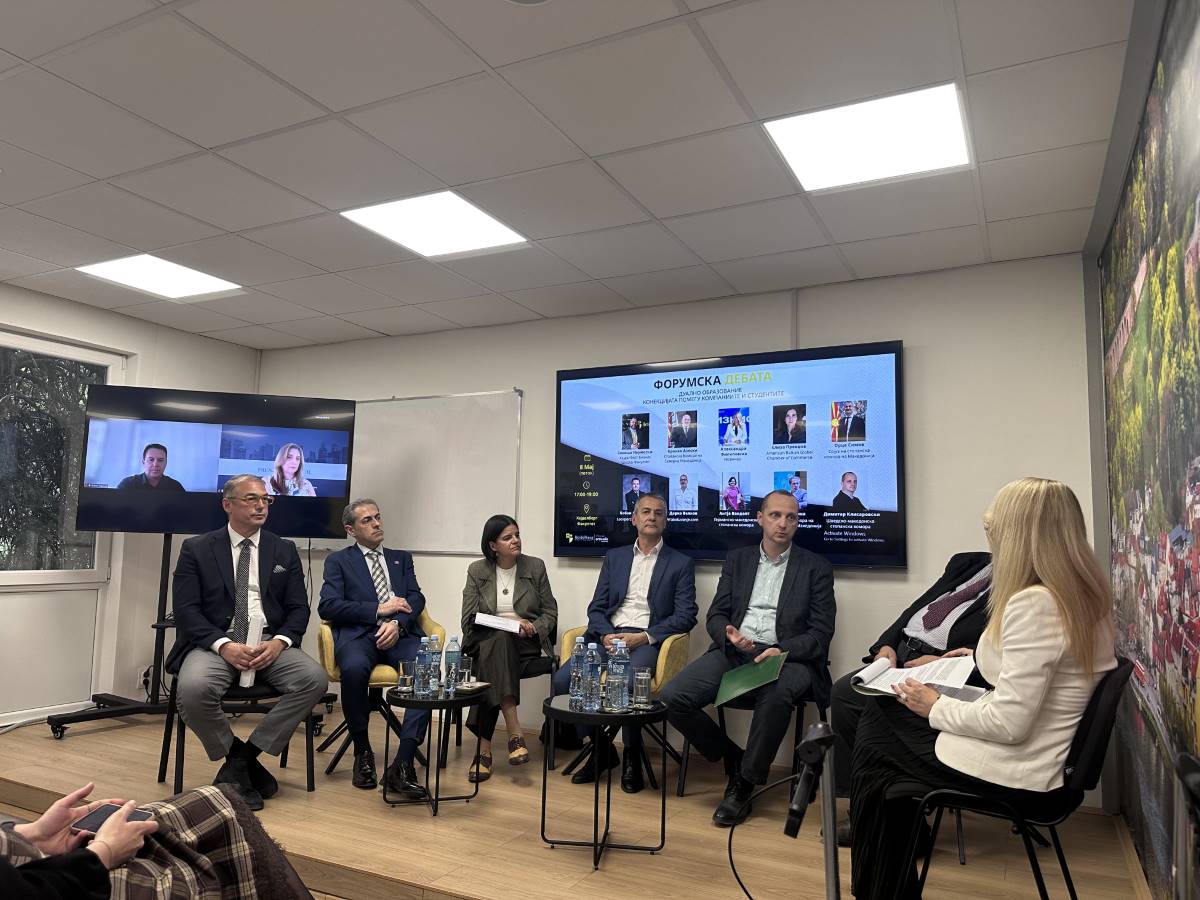
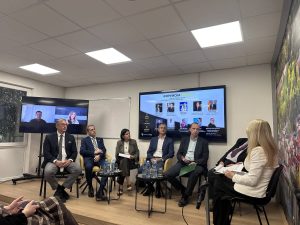
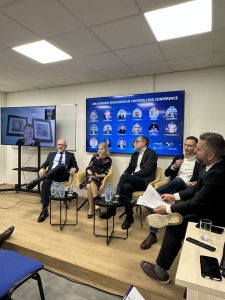

Skopje, May 8, 2026 – Dual education is not just an educational model, but a strategic investment in the future of young people, companies, and the Macedonian economy. This was the main message of the forum debate “Dual Education – A Link Between Companies and Students”, held at the Heidelberg Faculty in Skopje, with the participation of representatives from chambers of commerce, the business sector, international business organizations, the academic community, students, and parents.
The event opened a substantial discussion on one of the most important questions for the country’s future: how education should stop producing only diplomas and start producing young people prepared for real life, real companies, and a labor market that is changing faster than ever.
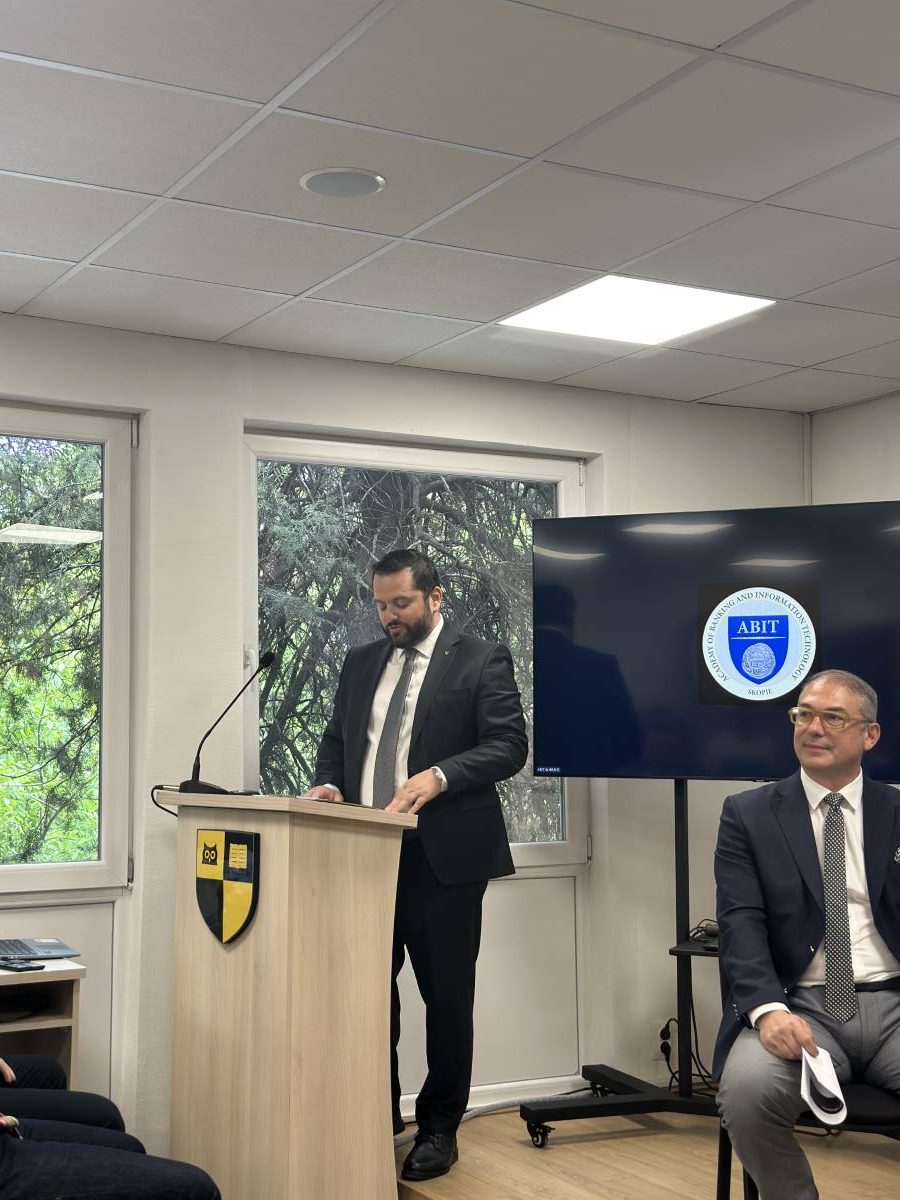
Prof. Dr. Sinisa Naumoski, General Director of Heidelberg, emphasized that the core mission of Heidelberg Faculty is to provide education that connects academic knowledge, practical work, and direct cooperation with companies:
“We must finally start creating young people who are ready for real life and for companies. Students at Heidelberg Faculty are not just listeners in the educational process, but partners in a model that enables them, already during their studies, to work in companies, gain experience, develop professionally, and build their future at home. The greatest investment today is not buildings, cars, or bank balances. The greatest investment is the education we can provide to young people,” said Naumoski.
A central topic of the discussion was what companies actually expect from young people. Employers increasingly seek young individuals with practical skills, independence, communication abilities, critical thinking, initiative, and a willingness for continuous learning.
Branko Azeski, President of the Economic Chamber of North Macedonia, emphasized that dual education is a model that can reduce the gap between what formal education offers and what the real sector demands:
“Business demands skills. Business demands practical value—what a young person can actually do when they come to the workplace. If we want the country to move forward, we must invest in education,” Azeski stated.
Young people should not enter the labor market only after graduation, but much earlier—through internships, mentoring, real tasks, and direct cooperation with companies. This is where dual education shows its greatest value, was one of the key messages.
From an international perspective, Boban Popeski, CEO of Lockport Finance (USA), highlighted that the global market already operates under new rules, where “artificial intelligence will automate part of the tasks that are currently taught and performed, but human competencies—communication, leadership, sales, decision-making under pressure, and solving complex situations—will remain crucial. Those who start working earlier, making mistakes, and learning in real environments will adapt much better in the future. In the new economy, experience, in addition to the diploma, is essential,” Popeski said.
Antje Vandelt, delegate of AHK – German-Macedonian Economic Association, presented the German dual education model as a system in which companies, chambers, and educational institutions jointly develop curricula, quality standards, and practical training.
“The future of education will not be about accumulating information. Information is already accessible. What is needed is for young people to learn how to manage information, how to use technologies, and how to make decisions,” Vandelt stated.
According to Eliza Prenjov, President of the American-Balkan Global Chamber of Commerce, “Adaptability, communication, and the ability for professional behavior in a business environment are key. Practical experience helps students discover their talents, where their interests lie, and in which direction they can develop the most.”
The panelists agreed that North Macedonia has young people with potential, but the system must provide more opportunities, stronger connections with companies, and a clear development perspective. Practical experience, mentoring, and work experience during studies are crucial for keeping young people motivated, competitive, and ready to build their careers in the country.
The conclusion of the debate is that dual education should become a more widely applied model because it benefits all stakeholders: students gain immediately applicable knowledge, companies gain work-ready personnel, and the economy gains a foundation for higher productivity, innovation, and competitiveness.
Heidelberg Faculty in Skopje, as the first higher education institution in Macedonia and the broader region to systematically implement the dual education model, confirmed its role as an initiator of a new approach in education-an approach in which students learn, work, gain experience, and prepare for a future in which knowledge must be connected to the real economy.
Dual education is no longer a matter of choice, but a necessity. The question is not whether we need such a model, but how quickly and how effectively we can develop it in order to create generations ready to succeed-both at home and on the global market.
About Heidelberg Business School – Faculty Skopje
Heidelberg Business School – Faculty Skopje is a modern higher education institution offering a German model of dual education, focused on practical skills, employability, and international competitiveness of students.